
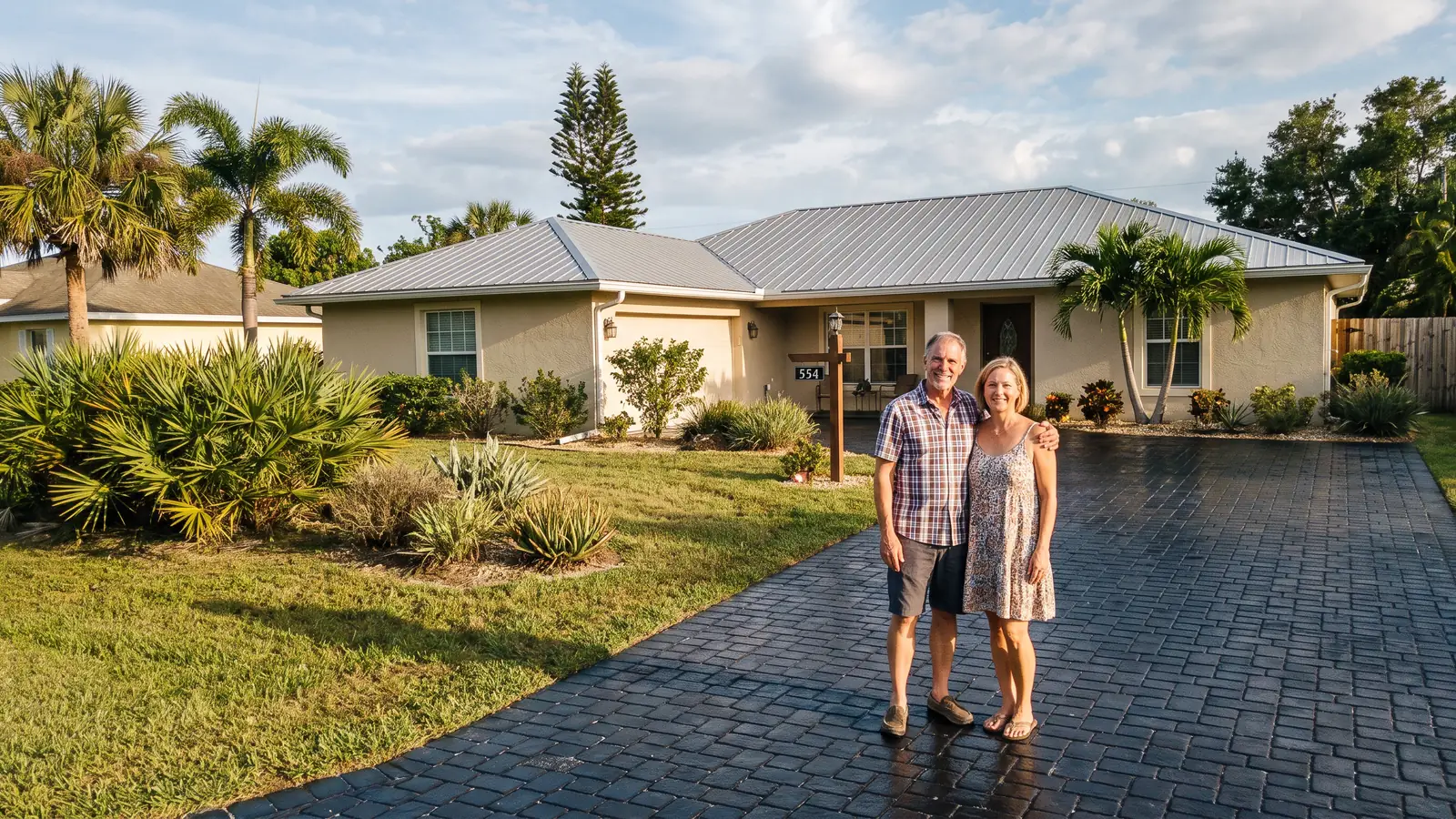
Paver sealing for South Daytona homes
Paver Sealing in South Daytona, FL
South Daytona sits low beside the Halifax River, so call (386) 337-3172 for a free paver sealing estimate.
- Brings out deeper paver color
- Fresh joint sand helps lock pavers in place
- Gives weeds less room to grow
- Makes the surface easier to keep clean
- Free estimate, no obligation
Request a Free Estimate
Free, no obligation.
Fast, careful paver sealing in South Daytona
Want paver sealing in South Daytona without a salesman at your door? A local contractor will inspect your driveway, patio or pool deck for free after you ask. Use request your free estimate, and the answer comes back within 1 business day, usually much faster.
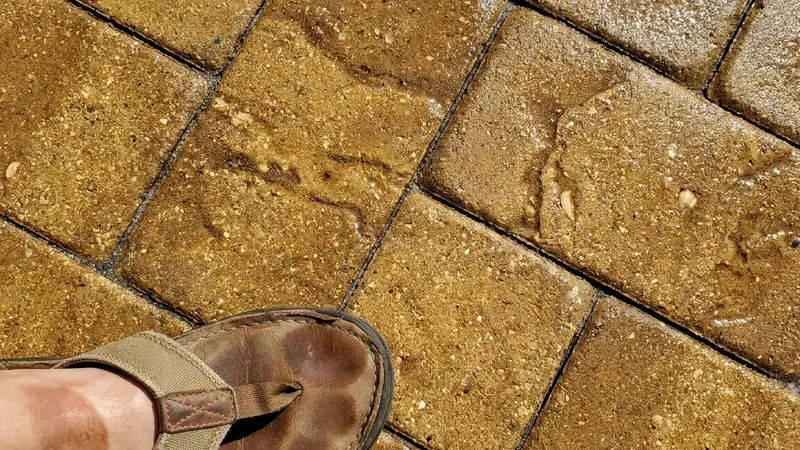
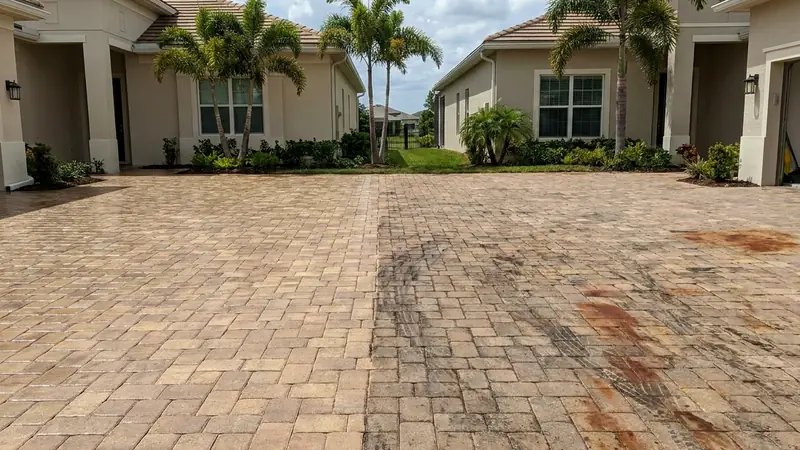
Here is the usual picture: a gray film over the drive, rust freckles along one edge and joints that have thinned out. After the wash, the sand and the coat, the drive shows one clean color. Questions first? Call (386) 337-3172.
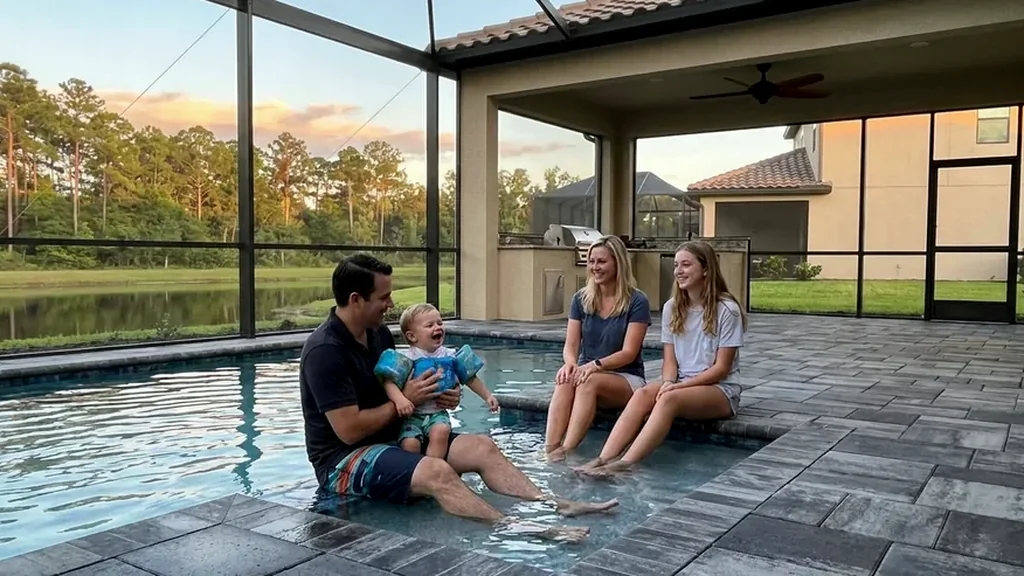
Why hire a local paver sealing contractor in South Daytona?
South Daytona is flat, close to the water and in the middle of storm drain work, so how fast pavers dry out is a real question. A local contractor plans for that, and request your free estimate gets you the details.
A free inspection
The contractor looks over your South Daytona pavers at no charge and puts a price in writing. You decide afterward, with no obligation. A reply comes within 1 business day.
A yardstick for bids
The going rate published around Northeast Florida is $1.50 to $3.00 per square foot for the wash, sand and sealer. Use it to check any South Daytona bid. It takes a minute to check against any quote.
Measured and itemized
Ask for the square footage and each step on paper. A clear quote makes two bids easy to compare. A clear quote shows you what you are paying for.
You set the pace
You pick the date and the finish. A good estimate never needs a knock at the door, and you can say no. You can also ask for a call when the job is done.
Get Your Free Estimate in South Daytona
Tell us about your pavers in South Daytona.
Free, no obligation
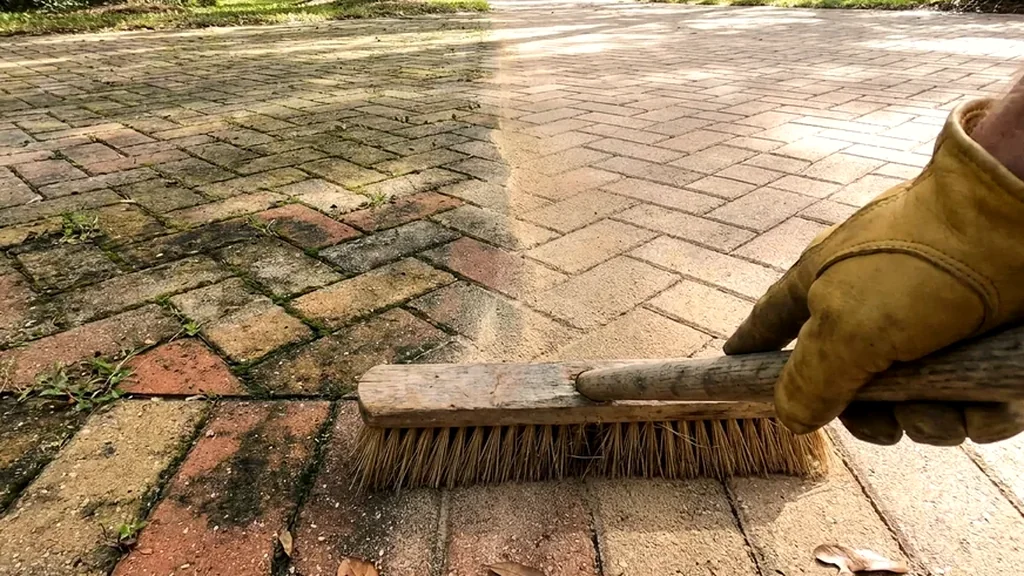
What paver problems show up most in South Daytona?
Water that stays on flat ground
South Daytona averages 6.5 feet above sea level, and 1.3 of its 5.0 square miles are water. The city says it is upgrading its stormwater system to handle flooding better, with projects in residential neighborhoods. Pavers that stay wet go green and dry slowly. Because sealer needs a dry surface, low spots get checked before any date is set. A lanai or back patio on the low side of the lot is the usual trouble spot. If a puddle sits for a day after rain, point it out when the contractor visits, since that spot decides how long the job must wait. Fixing a dip caused by drainage is a job for an installer, and the sealer comes afterward. Low, flat lots like these may hold a shallow puddle for hours after a downpour, so ask the contractor to look at the lot soon after rain if you can.
Orange stains from sprinklers
University of Florida material says most Florida well water is high in iron and can leave rust deposits. Orange stains show up most often when that water is used for irrigation. If your yard runs off a well, look for orange lines where the spray lands. Pointing spray heads off the pavers keeps new marks from forming. The contractor can show you where the spray lands during the walk-through. The stains look minor at first, but they stand out against a freshly sealed surface, so they come out first. The orange tint can look like a shadow, which is why it is easy to miss until the surface is clean.
Sandy ridge soil and thin joints
Volusia County describes long sand ridges of Daytona, Paola and Astatula soils along this coast. Sandy ground drains fast, yet it shifts under hard rain. When joint sand goes missing, joints widen, soil moves in and weeds follow. Sand has to go back in after the wash. Ground that drains fast does not make the base safe. Weeds that return every spring are a sign that the joints, and not the weeds, are the real problem. The Atlantic Coastal Ridge formed when the ocean stood 4 to 6 feet higher, which is why sand underlies so much of the county.
Haze from a coat that did not work
A Daytona Beach company reports that earlier solvent-based products can cause white hazing when the air is humid. Many South Daytona houses have changed hands, so a coat may be of unknown age. A Volusia County company adds that previously sealed pavers need the old sealer stripped, which adds cost. A hazy or peeling surface needs a plan before new sealer goes on. Photos of white or peeling patches help the contractor plan before the visit. Photos of any white or peeling patches help the contractor plan before the visit.
Wear from sun and thick air
The same Daytona Beach company says unsealed driveways in the area show fading and joint erosion within 12 to 18 months. Humidity there stays above 70 percent year-round. South Daytona has the Halifax River on its east side. A fresh coat slows the wear between jobs. Pool decks and open driveways show it first, since they get sun for most of the day. The difference between a covered corner and the open middle of a drive shows how much color has gone. The gap between a covered corner and the open middle of the drive shows how much color has gone.
Do South Daytona homes near the Halifax River need different paver care?
Usually they do, since homes by the water see more salt, damp and flood risk than homes on higher ground. The city sits just south of Daytona Beach, with the river on one side and Ridgewood Avenue running through it. A contractor will want to know which part of town you are in. Give your street and any history of standing water when you request your free estimate.
South Daytona began as the town of Blake, where early settlers grew oranges and vegetables. After World War II builders arrived, and the town put in sewer and water lines. Streets laid out in different decades can hold different pavers and sealers. When you call (386) 337-3172, mention roughly when your house was built.
The city also runs a Do Not Knock Registry that residents can join to limit door-to-door visits. A good paver estimate never needs a knock. It starts with a call, a look at the pavers and a price in writing. To start that way, request your free estimate.
What does paver sealing cost in South Daytona?
Published for Northeast Florida, the rate is $1.50 to $3.00 per square foot, and it pays for the wash, the sand and the sealer. In South Daytona the price moves with shade growth, rust stains, lost joint sand and any old coat, and stripping a failed coat adds cost. To get a figure matched to your pavers, request your free estimate.
A bigger driveway or a pool deck lifts the total even at the same rate. If a stretch has sunk, resetting it adds time ahead of the sealing. Ask for the measured area and the list of steps in writing. Call (386) 337-3172 for a rough idea before you commit.
| Paved area | Typical example | Clean, sand and seal |
|---|---|---|
| 300 sq ft | Small patio or walkway | $450 to $900 |
| 600 sq ft | Two car driveway | $900 to $1,800 |
| 1,000 sq ft | Large driveway or pool deck | $1,500 to $3,000 |
| 1,500 sq ft | Driveway plus pool deck | $2,250 to $4,500 |
Math based on the $1.50 to $3.00 per square foot that Northeast Florida paver companies published as of November 2026. Your contractor sets the actual price after seeing the surface. Repairs, leveling and stripping failed sealer are usually extra.
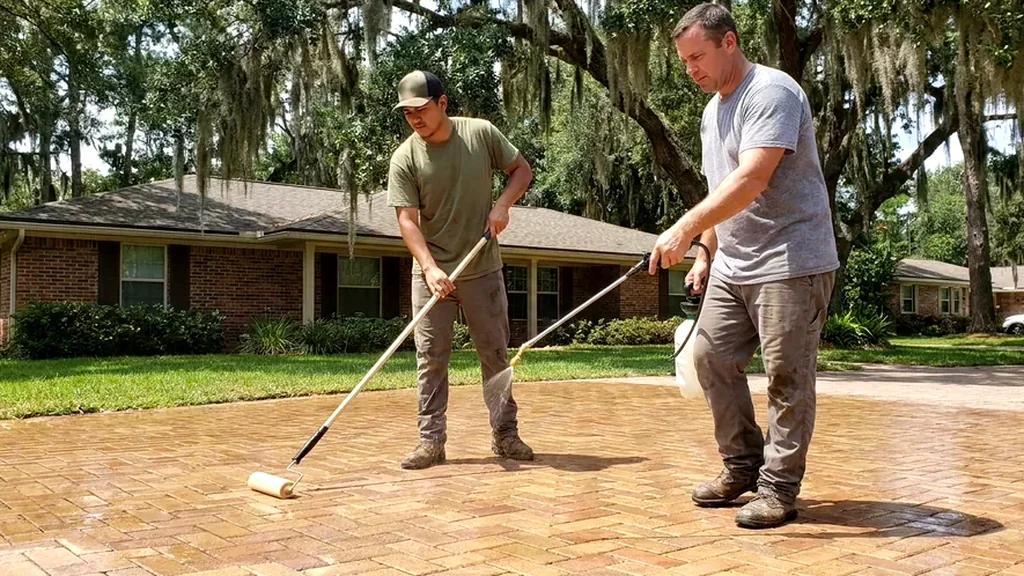
How does a paver sealing job work in South Daytona?
Walk the surface and check drainage
The contractor starts by seeing where water sits on your South Daytona drive after rain. Low spots and dips get marked, since sealing over a dip only preserves it. Photos of any past standing water help the contractor plan the day. Write down where the sprinklers throw water, since the contractor will ask. Builders arrived after World War II, so a walk around the lot may turn up pavers laid in different years.
Wash and treat the stains
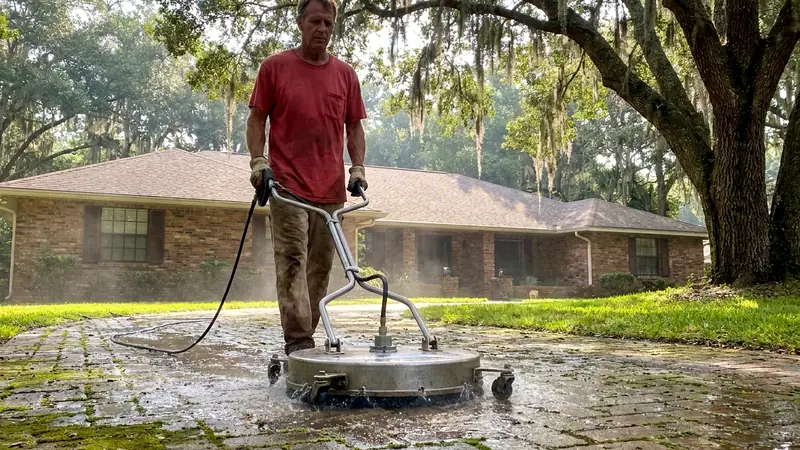
The wash clears film, algae and dirt, and rust marks from irrigation get treated at this stage. Dark patches near a downspout may be washed a second time. A garage door and a stucco wall are protected from overspray. Ask how rinse water is kept off your lawn and shrubs, since some owners water them by hand. Anything that blocks the hose, such as a parked car or a planter, is moved before the wash.
Put the sand back
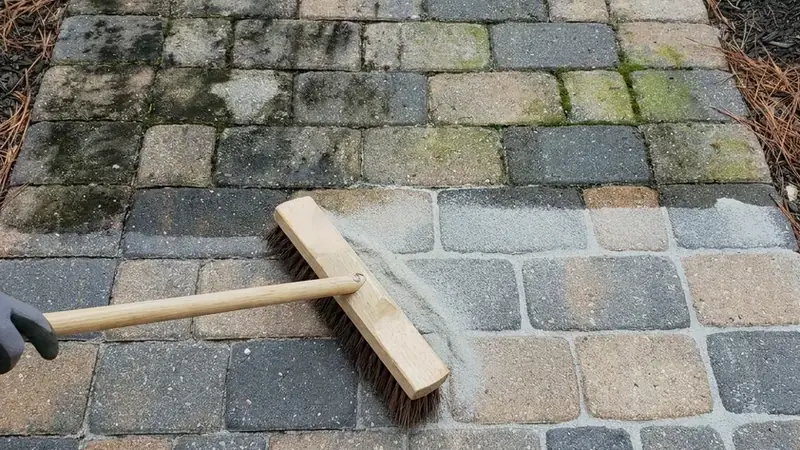
The wash takes loose sand out of the joints, so fresh sand is swept in and the surface cleaned. On sandy coastal ground, joints often run low. A drive that has been missing sand for a long time takes longer. Full joints also make the finished surface look sharper, with clear lines between each paver. The sand is worked into every gap, then the surface is swept clean.
Wait out the damp
Sealer needs a dry surface. The rainy season runs about May through October, and a flat lot can hold water after a storm. The contractor checks the forecast and the low spots, then waits if needed. Coating damp pavers risks haze. Shady patios and the lee of the house stay wet longest, so the contractor touches those spots before coating. A day lost to weather is cheaper than a hazy coat. Dew and sprinkler overspray count, so the contractor looks at the surface before the first pass.
Seal in the finish you chose
Pros typically spray the sealer and then back-roll it. Most quotes put a coat at two to five years. Ask for the sealer's name in writing so the next coat can match it.
Complete paver services in South Daytona
South Daytona jobs follow a plain order of wash, sand, dry and seal. The wash lifts film, algae and rust, and fresh sand fills the joints. Sealer goes last, so nothing dirty gets trapped. Each stage takes a different time on every lot, so call (386) 337-3172 to ask about yours.
Driveways take the sun and the tires, while pool decks and lanais stay wet. A walkway beside a lawn that gets watered will catch the spray. Put each surface on your list when you request your free estimate, and each gets its own plan.
Two decisions come with sealer: its base, water or solvent, and its finish. If the earlier coat is solvent-based, a water-based one cannot follow it. Phone (386) 337-3172 to talk through what suits your home.
Weather and drainage set the schedule. The rainy season starts in May and ends in October, so late fall and spring often give steadier windows. A lot that holds water may need extra drying time. To plan a date, request your free estimate.
Questions to ask before you hire
- If part of my driveway has stains from a leaking truck, will you treat that spot first?
- Does your price change for a long, curved driveway on a country road lot?
- Is a satin or a wet look better for pavers that get full afternoon sun?
- Will you sweep in new joint sand after the wash, and is it the kind that hardens?
- How long before the color starts to look dull again, and when should I call for a re-seal?
- How do you protect my palms, azaleas and sod from the sealer and the rinse water?
- Can you wash and seal the back patio even if the screen enclosure is in the way?
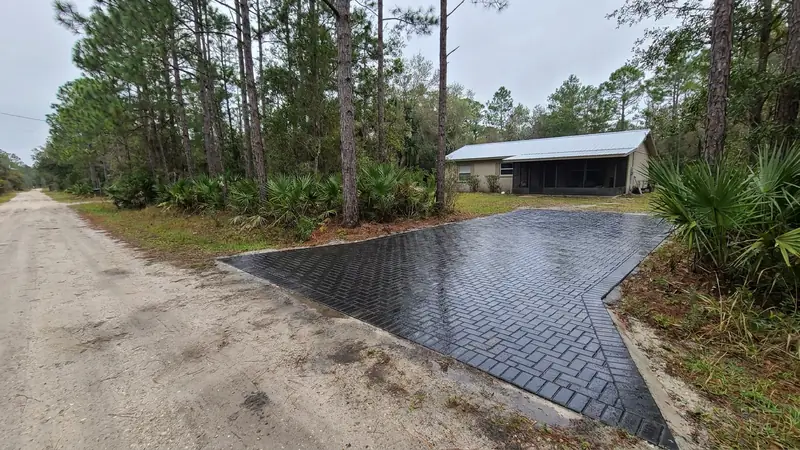
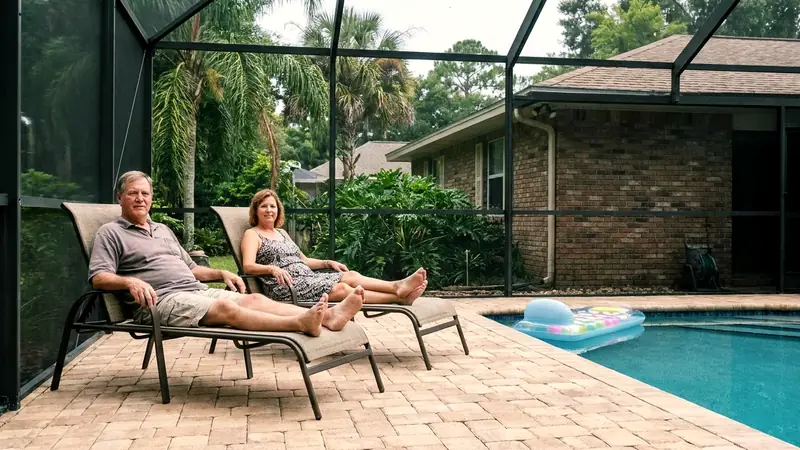
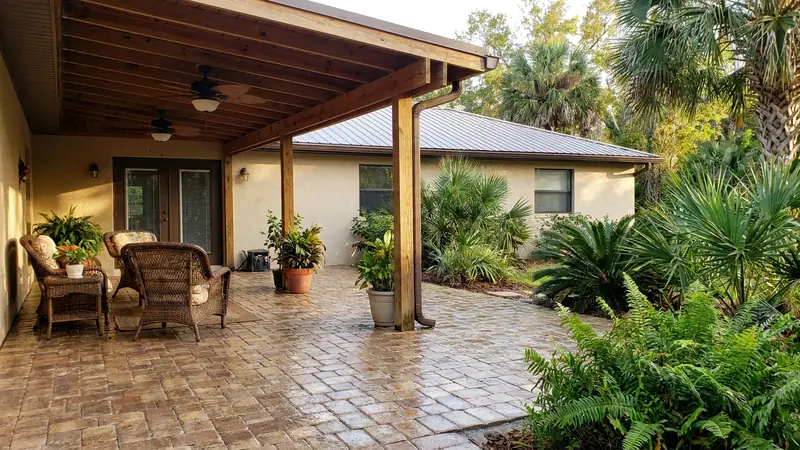
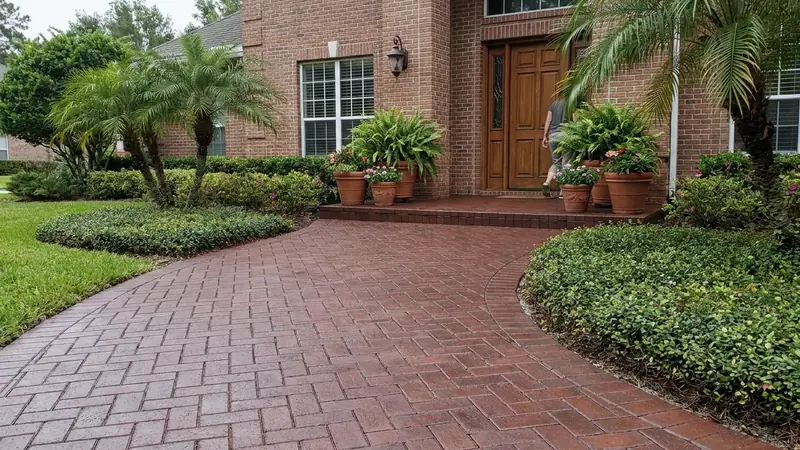
What do sealed pavers look like around South Daytona?
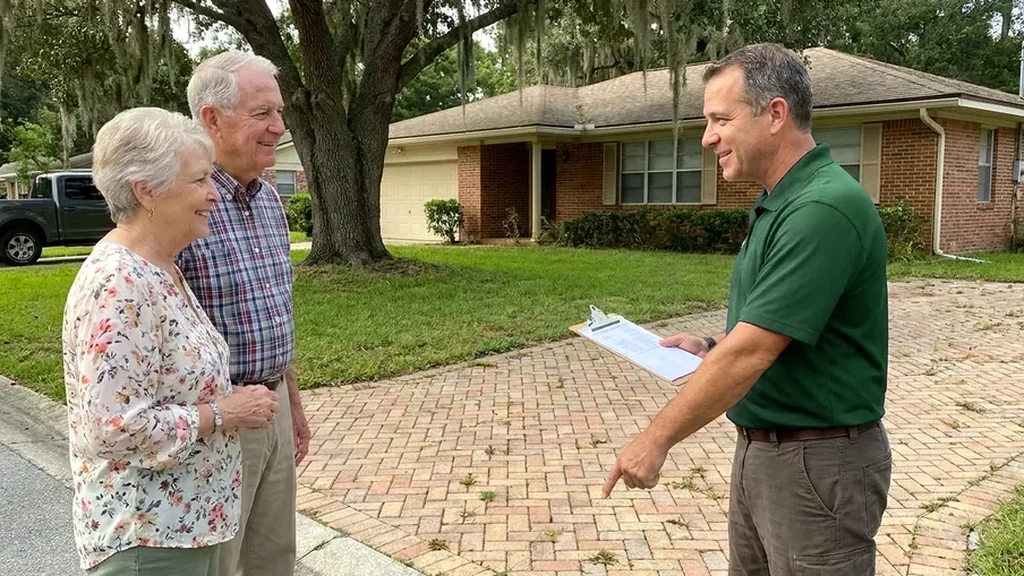
Why local matters in South Daytona
A contractor who works South Daytona knows the city is low and flat, so drying time is the first question. That keeps a job from being coated before the pavers are ready. Outsiders passing through may skip that question. To get local help, call (386) 337-3172.
Local knowledge also covers the city's storm drain work. Projects in residential neighborhoods can change where water goes, and a nearby contractor sees that. The date can then be adjusted. Ask how standing water changes the plan when you request your free estimate.
A local contractor also expects you to want a clear price in writing, with no pressure and no door-knock pitch. That fits a city that offers a Do Not Knock Registry. The estimate is free, and you can turn it down. If that sounds right, request your free estimate and share your street.
What is worth knowing about South Daytona before you call a contractor?
South Daytona has a short history. Blake got its first post office on August 19, 1878, and its residents left Daytona Beach around 1938 over taxes and appraisals. The town became a city in 1951, after early settlers had made a living in orange culture and vegetable gardening. If your house is on an older street, request your free estimate.
City Hall is at 1672 S Ridgewood Avenue, and Reed Canal Park is one of the city's parks. The Halifax River borders the city on the east, and the city keeps working on its storm drains. Near City Hall, Reed Canal Park or the river, call (386) 337-3172 and name your street. The city counts nearly 44.5 miles of roadway, 40 miles of sewer lines and 55 miles of water lines.
Frequently Asked Questions
Is it good to seal pavers in South Daytona, Florida?
For most homes, yes. The wash comes first so the surface starts clean, and the coat goes on last.
How much does it cost to have pavers cleaned and sealed in South Daytona?
The going rate published around Northeast Florida is $1.50 to $3.00 per square foot for the wash, sand and sealer. Pool decks and lanais count in the total, so ask the contractor to list each area on its own line. Even a small area of pavers gets the full set of steps. Even a small area of pavers gets the full set of steps.
Why is paver sealing so expensive for a South Daytona driveway?
Most of the price is prep: washing, re-sanding and waiting for a dry surface. The sealer is a smaller share. Stripping an old coat adds cost, and small areas cost more per square foot. The estimate lists each step, so you can see where the money goes.
Is it better to spray or roll paver sealer in South Daytona?
Pros typically do both. One Jacksonville company says rolling alone risks lap marks and spraying alone risks over-application on textured pavers. Ask your contractor how they apply it. Spraying covers the surface and the joints evenly, and rolling smooths the finish and works the sealer in. The method affects how even the finish looks, so it is a fair question.
How often do pavers need resealing in South Daytona?
Sealer coats are commonly quoted at two to five years apiece. Water that beads on a paver shows a working coat, and water that soaks in and darkens it shows a spent one. Put the next coat on your calendar so a worn one does not sneak up on you. Check the surface each spring and after any big storm season. Check the surface each spring and after any big storm season.
Can new sealer go over what is already on my South Daytona pavers?
That depends on the old coat. Peeling or cloudy sealer is a sign that the old coat has failed, and the contractor can tell you what it will take to remove it. A sound coat may stay on, and a failed one has to go before anything new. A sound coat may stay on, and a failed one has to go before anything new.
Do pavers need to be dry before they are sealed in South Daytona?
Yes. Sealer needs a dry surface, and a coat laid on damp pavers can haze. On a flat lot, low spots can take extra time to dry after rain. Shaded patios can take longer to dry than a sunny driveway, so the contractor may seal the sunny areas first. Waiting a day is usually cheaper than redoing a hazy coat.
Should I sign up for the Do Not Knock Registry before getting a paver quote?
That is up to you. The city offers the registry to residents who want to limit door-to-door solicitation. You can still request a paver estimate yourself, and it is free with a reply within 1 business day. Joining the registry does not affect your estimate. The estimate is a call, a look and a price, and you can say no. The registry is separate from any estimate you request.
Nearby areas we serve
Ready for a Free Estimate in South Daytona?
Call (386) 337-3172 and tell us about your pavers.
Free, no obligation