
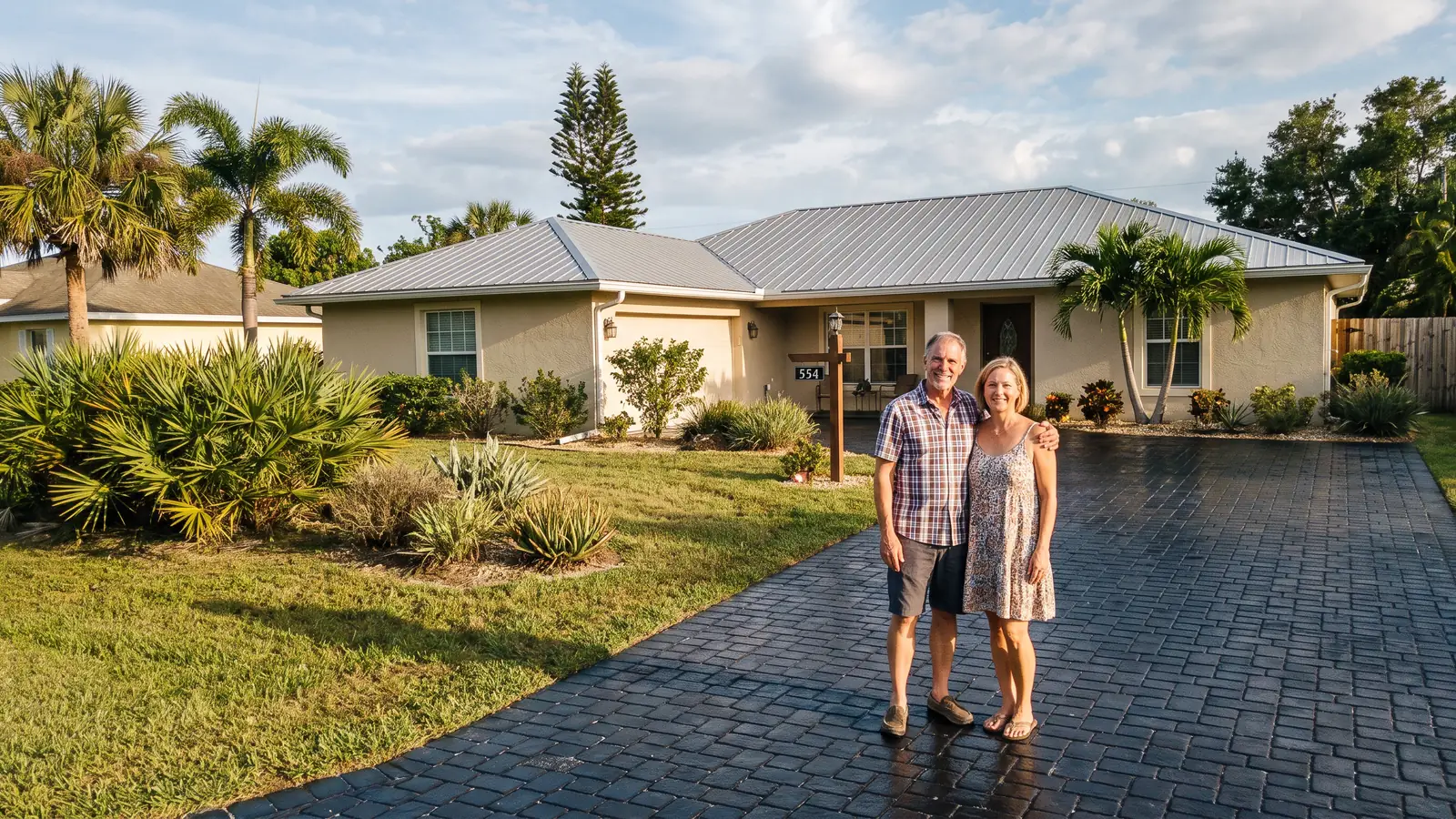
Paver sealing for Daytona Beach homes
Paver Sealing in Daytona Beach, FL
Salt air, afternoon storms and sun wear Daytona Beach pavers down, so call (386) 337-3172 for a free sealing estimate.
- Brings out deeper paver color
- Fresh joint sand helps lock pavers in place
- Gives weeds less room to grow
- Makes the surface easier to keep clean
- Free estimate, no obligation
Request a Free Estimate
Free, no obligation.
Fast, careful paver sealing in Daytona Beach
Paver sealing is available across Daytona Beach, on the beachside and on the mainland, and the first look is free. A local contractor washes, re-sands and seals driveways, pool decks and entries. Fill in request your free estimate and a reply follows inside 1 business day, usually much sooner.
Maybe your pavers wear a white haze from an earlier coat, the joints have thinned, and the color has gone flat. A proper wash, fresh sand and the right sealer can bring one even tone back. To talk through what you see first, call (386) 337-3172.
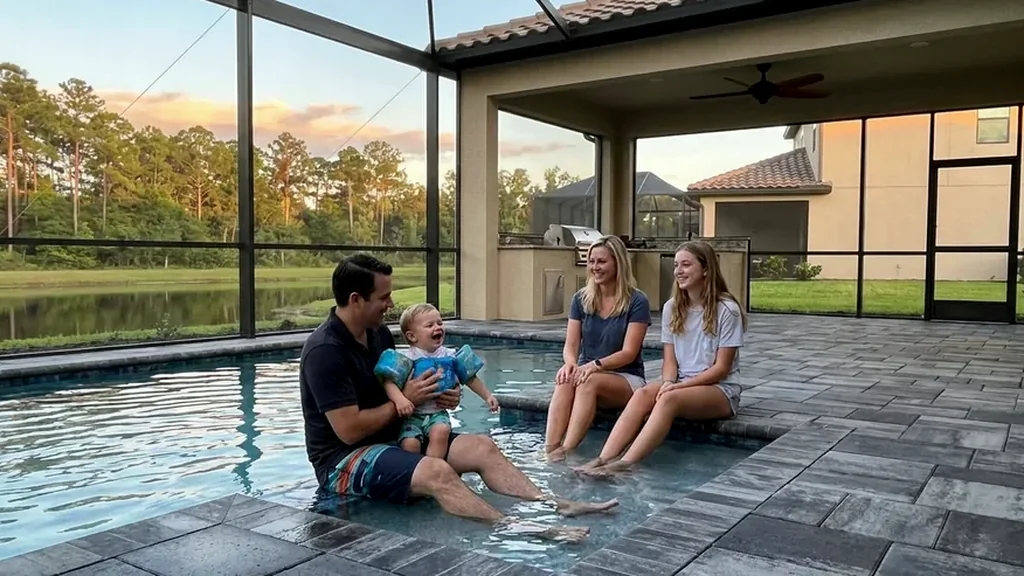
Why hire a local paver sealing contractor in Daytona Beach?
Daytona Beach is a big city split by a river, with salt on one side, rentals and second homes throughout, and storms most afternoons in summer. A contractor from here plans for each of those, and you can request your free estimate to learn more.
A free look, no obligation
The contractor checks your Daytona Beach pavers and quotes a price before any work starts. The decision stays with you.
A published price range
A Daytona Beach sealing company publishes $1.50 to $3.00 per square foot, and companies around the region commonly list the same. Check your bid against it.
A finish with grip
Daytona Beach pool decks and entries are wet often. Matte or a traction additive keeps them from feeling slick. A contractor can show you both finishes first.
Scheduling that works for you
If you rent the property out or live elsewhere part of the year, ask for a window and a call when the job is done. The contractor can call you when the job is done.
Get Your Free Estimate in Daytona Beach
Tell us about your pavers in Daytona Beach.
Free, no obligation
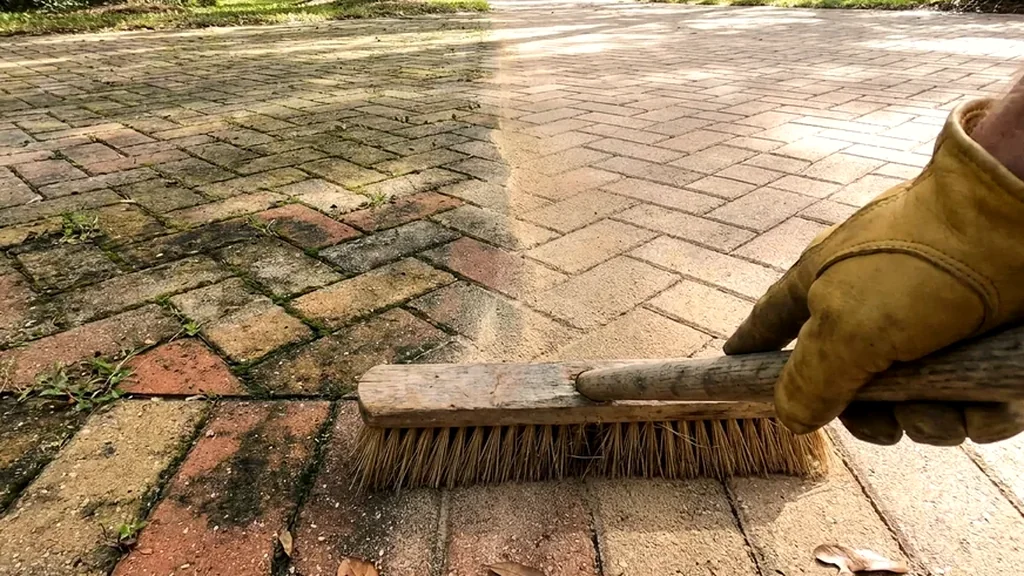
What paver problems show up most in Daytona Beach?
White haze from an earlier coat
A Daytona Beach sealing company says white hazing can come from earlier companies using solvent-based products in high humidity. Sealer laid on damp pavers can trap moisture and cloud. A hazy drive looks worse than a bare one. The contractor needs to see the haze before choosing a plan, since a clean sealed surface is the goal. If your pavers look milky in some spots and clear in others, say so on the call. That pattern helps the contractor judge how the earlier job was done. A reliable fix starts with a clean surface and a product that suits the weather on the day.
Salt-laden air that wears the coat down
The same company says salt-laden air speeds sealer breakdown and that homes see humidity above 70 percent year-round. It says unsealed driveways there show fading and joint erosion within 12 to 18 months. Daytona Beach has over 23 miles of public beaches, and the Halifax River cuts through the middle. So salt reaches most of the city, which means a coat wears out sooner than inland. Pool decks and entries that face the water take the brunt of it. Fading is slow, so many owners notice it only when they compare a covered corner to the open middle. Over 23 miles of public beaches, with driving still allowed on most of them at 10 mph, means sand and salt ride home on tires into many driveways.
Sand carried off by heavy runoff
Heavy rain runoff erodes joint sand, a common local issue according to the same company. The city gets 51.25 inches of rain a year, most of it from June through September. Washed-out joints widen and let weeds in. Sand has to be refilled after the wash and before sealing. After a storm week, look along the curb edge and under downspouts, since those spots lose sand first. A thin line of weeds in a joint is often the first clue. If you have a rental, a quick walk between guests is a cheap way to catch thin joints early.
Slick pool decks and tight-brick entries
A Daytona Beach company says a glossy film on smooth travertine or tight brick can feel slick when wet. Natural or matte finishes usually keep better grip, and a traction additive can be added to the top coat. Rain and pool splash make this matter here. Tell the contractor where the wet feet will be. Bare feet and wet shoes both matter here, and so do kids around a pool. The finish is chosen with that in mind.
Green growth in damp shade
Shaded areas hold moisture that feeds algae, according to a local company. Under an oak, beside a wall or behind a screen enclosure, pavers can stay damp for days. Green film starts there. It is washed off before sealing, since sealer locks in whatever is on the surface. North-facing walks and spots behind enclosures are common. A wash takes most of it off before the coat goes on.
Do pavers on the beachside need different care than on the mainland side of Daytona Beach?
Yes, because the beachside gets more salt and sun, while mainland streets tend toward shade and damp. The Halifax River splits the city, and four bridges link the two sides: Veterans Memorial, Broadway, Main Street and Seabreeze. Beachside streets along Peninsula Drive and Seabreeze Boulevard are named by one local sealing company as areas it serves. When you request your free estimate, say which side of the river you live on.
The Seabreeze Historic District, bounded by University Boulevard, the Halifax River, Auditorium Boulevard and North Atlantic Avenue, holds 596 historic buildings. Older houses often have older pavers, and past owners may have used any product. On the mainland, communities named by the same company include LPGA International, Pelican Bay, Latitude Margaritaville, Mosaic at Oakton and Breakaway Trails. Call (386) 337-3172 and name your community.
With 19.4 percent of housing units vacant in 2020 and over 8 million visitors a year, many homes here are rentals or part-year homes. If that is your case, a contractor can set a date between guests. About 39.7 percent of households are one person, so plain-spoken steps matter. Tell the contractor about your property when you request your free estimate.
What does paver sealing cost in Daytona Beach?
One Daytona Beach sealing company says typical paver sealing in the city costs $1.50 to $3.00 per square foot, depending on condition, size and surface. Companies around Northeast Florida commonly publish the same range. White haze, lost joint sand, a pool deck and a large area all move the figure inside it. To get a number for your pavers, request your free estimate.
Fixing a hazy coat can take extra steps before the new sealer goes on, which means extra time. Rental turnover dates can also shape the schedule. Ask for the measured area in writing and for the steps listed. For a first idea by phone, call (386) 337-3172.
| Paved area | Typical example | Clean, sand and seal |
|---|---|---|
| 300 sq ft | Small patio or walkway | $450 to $900 |
| 600 sq ft | Two car driveway | $900 to $1,800 |
| 1,000 sq ft | Large driveway or pool deck | $1,500 to $3,000 |
| 1,500 sq ft | Driveway plus pool deck | $2,250 to $4,500 |
Math based on the $1.50 to $3.00 per square foot that Northeast Florida paver companies published as of November 2026. Your contractor sets the actual price after seeing the surface. Repairs, leveling and stripping failed sealer are usually extra.
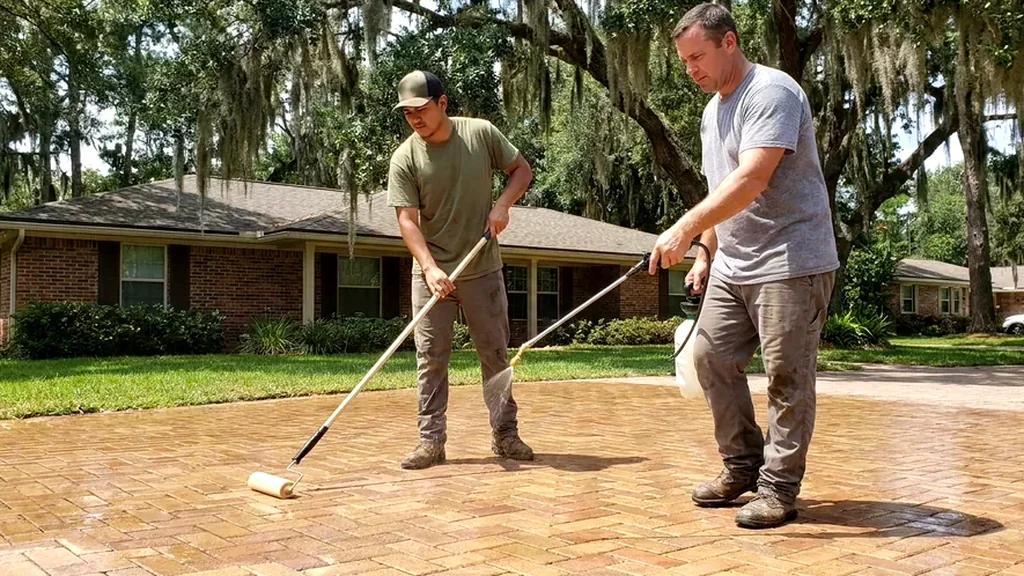
How does a paver sealing job work in Daytona Beach?
Check the surface and what is on it
The contractor looks over your Daytona Beach pavers for haze, sunken spots and old sealer. Sealing over a dip only preserves it, so dips are marked for repair. Tell the contractor if a past company left a white film. Photos of the surface in good light help the contractor give a closer first answer. Mention rental turnover dates here, since they shape the schedule. A city of 72,647 people has pavers of every age, so the survey starts with the surface in front of you and not an assumption.
Wash off salt film, algae and haze
The wash clears salt film, algae from shaded corners and surface dirt. Rust and oil spots are handled here too. Sealer locks in whatever is on the surface, so a clean start matters. Pool decks may take extra rinse time. If the pavers touch a seawall or a dock, the contractor takes extra care there.
Fresh sand in the seams
Washing pulls out loose sand, so the contractor sweeps in new sand and cleans the surface. Heavy runoff leaves Daytona Beach drives with low joints along the edge. Full joints keep weeds out and hold the pavers tight. This is also the time to point out any lifted stones. If the sand has been low for years, this step takes longer than the wash. Expect fresh sand to sit a little lower after the first rain, and ask whether a top-up is part of the job.
Wait for dry pavers
Sealer needs a dry surface. Afternoon pop-up storms are common, so the contractor watches the radar and often starts early. A heavy coat on damp pavers can haze. A day lost to rain is a better trade than a cloudy finish. The sheltered side of the house and screened patios hold damp longest, so the contractor feels those spots before coating. Ask the contractor what hour tends to work best at your address.
Apply the finish with the right grip
The sealer goes on in the finish you picked, with a traction additive on pool decks if you want one. A wet look gets scuffed sooner than matte. A coat is usually quoted to last two to five years. Tell the contractor which areas guests use most, so those get the finish with the most grip.
Complete paver services in Daytona Beach
A Daytona Beach job follows a clear order: wash, re-sand, dry, then seal. The wash lifts salt film and algae, new sand fills the joints, and the sealer goes on last. Nothing dirty is trapped underneath. To ask how long each stage takes on your lot, call (386) 337-3172.
Driveways take sun and tires, pool decks stay wet, and entries face the weather. Travertine and tight brick can feel slick when wet, so they need extra thought. Screened patios stay humid. Tell the contractor which surfaces you have when you request your free estimate.
Two choices shape the sealer: water-based or solvent-based, and matte or wet look. A local company likes breathable water-based sealer near the water, because it lets moisture out after storms. Earlier solvent-based coats in humid weather are a known source of haze. Call (386) 337-3172 to talk through what suits your home.
Timing follows the weather. Summer brings afternoon storms, so mornings are best. After a big storm, pavers need time to drain and dry. For a date that fits your calendar or your guest calendar, request your free estimate.
Questions to ask before you hire
- How long before the color starts to look dull again, and when should I call for a re-seal?
- Can you tell me in writing how many square feet you measured and what price per square foot that gives?
- My house runs on well water, so will the rust spots from the sprinklers come out before you seal?
- My pavers sit on sandy soil and a few have sunk, so who resets those before the sealer goes on?
- Can you tell me how long the sealer needs before a pickup truck or a boat trailer can sit on it?
- How do you protect my palms, azaleas and sod from the sealer and the rinse water?
- What do you do if a summer storm rolls in halfway through the job?
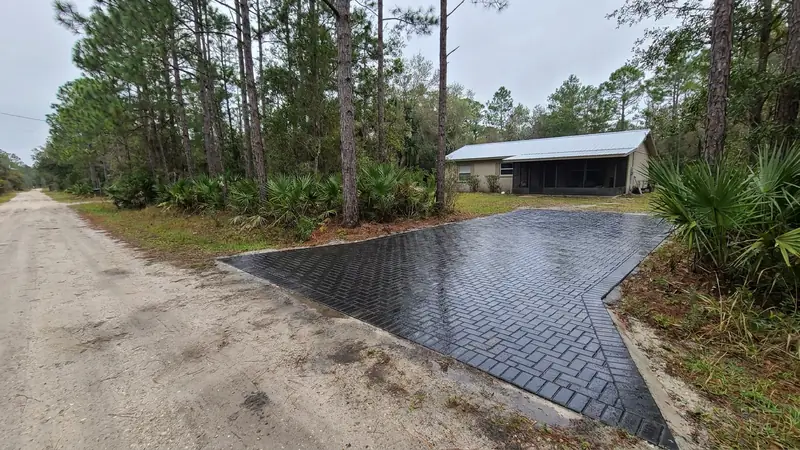
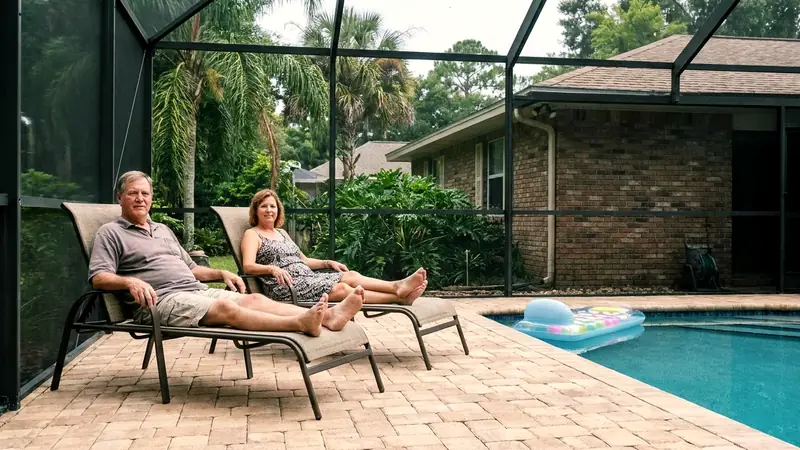
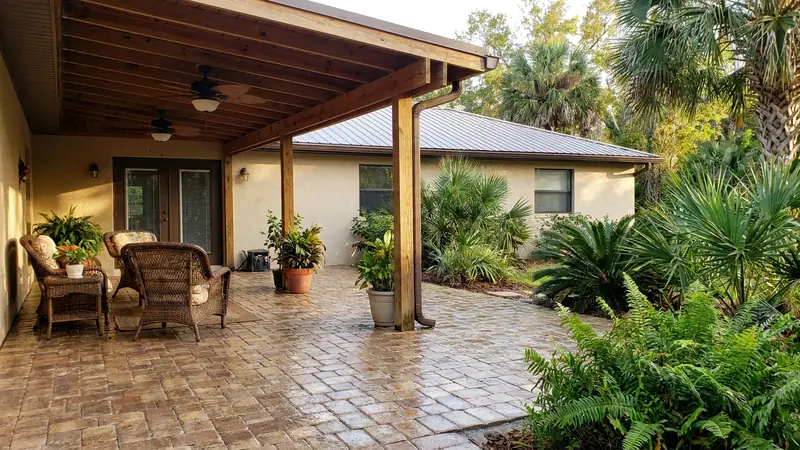
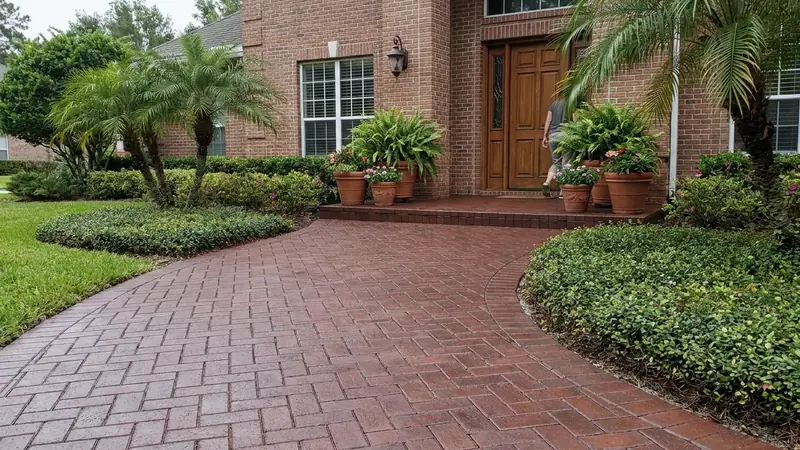
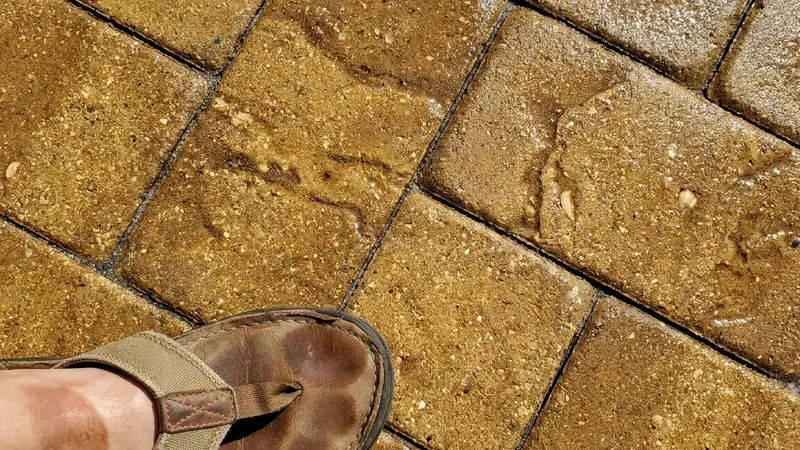
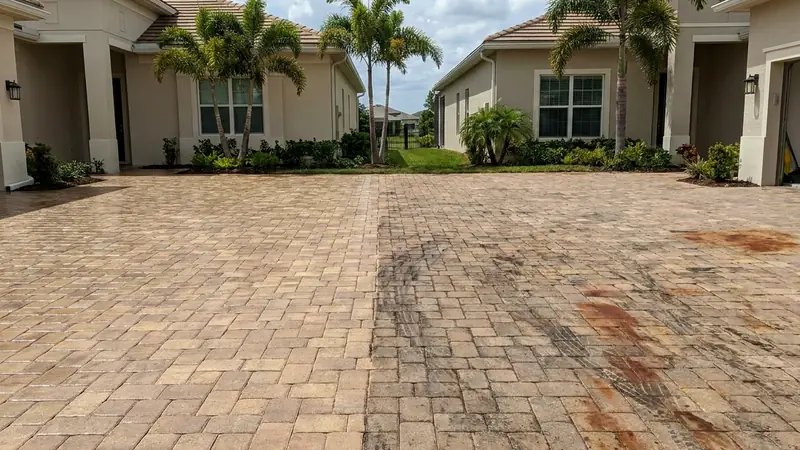
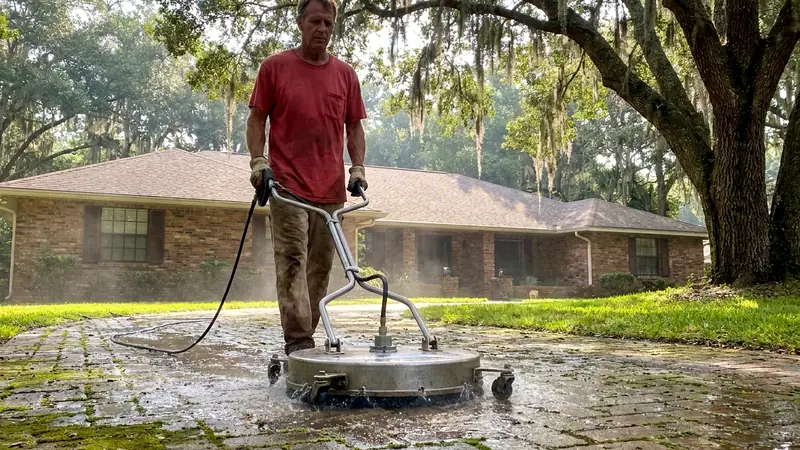
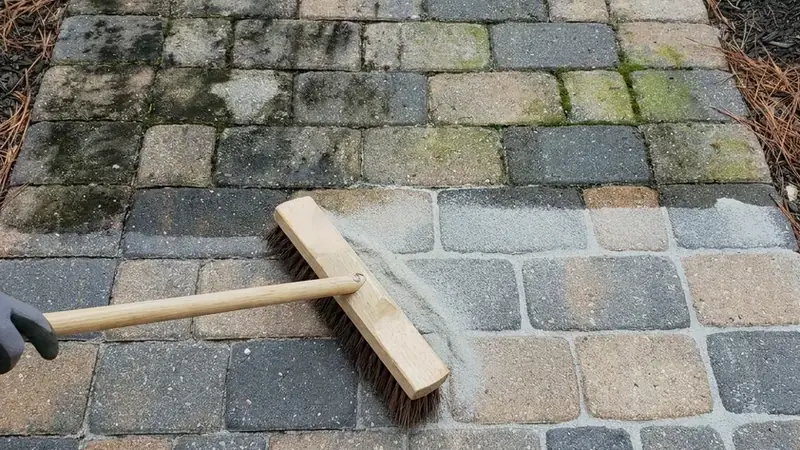
What do sealed pavers look like around Daytona Beach?
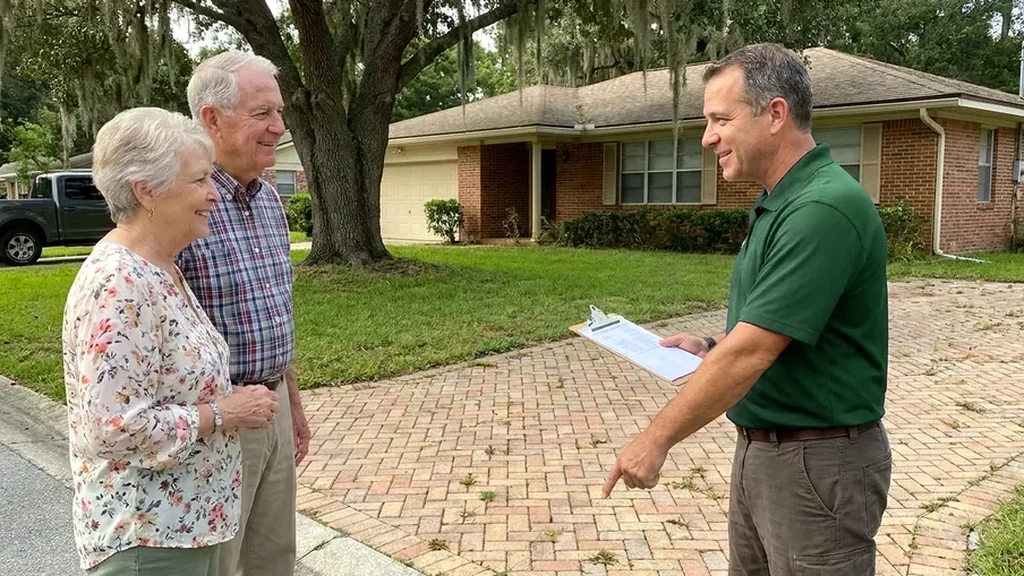
Why local matters in Daytona Beach
A contractor who works Daytona Beach knows the city has two climates, beachside salt and mainland shade. That shapes the wash and the finish before work starts. Out-of-area crews may treat the two sides alike. Reach a contractor who works both sides of the river at (386) 337-3172.
Local timing counts too, since afternoon storms are common and a nearby contractor can shift the start. It helps when your property is a rental with set guest dates. Rained-out days are common, so request your free estimate and ask how one is handled.
A local contractor also knows older districts like Seabreeze sit beside newer communities. The pavers in each can differ a lot in age and in what is on them. Matching the wash and the sealer to what is there protects the surface. If that is your case, request your free estimate and mention your neighborhood.
Does Daytona Beach's racing and beach history matter for my pavers?
Only a little, but it explains the city. Cars can still drive on most beach areas at 10 mph, and Daytona International Speedway was built in 1958 to replace the beach course. David Rogers bought 47 acres in 1884 and named his development Seabreeze, and in 1926 three towns joined as Daytona Beach. If your home is near the old Seabreeze streets, request your free estimate.
Tourism brings over 8 million visitors a year, and Hurricane Charley in 2004 hit the city hard, so rentals and storm care are both part of local life. The Main Street Pier and Main Street Bridge draw people to the beachside. Close to the pier, the speedway or the old Seabreeze blocks, call (386) 337-3172 and give your street. The city has four toll-free bridges across the Halifax: Veterans Memorial, Broadway, Main Street and Seabreeze.
Frequently Asked Questions
Why did my pavers turn white after another company sealed them in Daytona Beach?
White haze often comes from solvent-based sealer laid in high humidity or on damp pavers. A Daytona Beach company says this is a known local issue. A contractor can look at the haze and tell you what can be done. The same coat can be matte or wet look, so you can choose how it looks and feels.
What are the downsides of sealing pavers in Daytona Beach?
A sealer coat wears out and has to be renewed every few years. Scuffs show sooner on a wet look than on matte, and gloss can be slick when wet. It also needs a dry surface, which can move a date in storm season. Ask the contractor to name the finish, the product and the steps in the quote so you can compare it to another bid.
How much does it cost to have pavers cleaned and sealed in Daytona Beach?
A Daytona Beach sealing company says typical paver sealing costs $1.50 to $3.00 per square foot, and the region commonly publishes the same range. Condition, size and surface move the number. The quote should state the measured area. Pool decks and entries count in the total, so mention them up front.
What is the average cost to seal pavers in Daytona Beach?
Plan on $1.50 to $3.00 per square foot to clean, sand and seal. Your total depends on area, haze, lost sand and any pool deck. A free estimate gives you the actual figure for your property. The estimate is free, so a quote is a low-risk way to learn where your property falls.
How long do paver sealers last in Daytona Beach?
A coat is usually quoted to last two to five years. Salt-laden air speeds sealer breakdown here, so beachside homes lean toward the short end. A splash of water that beads means the coat is working. Splash water on a paver. If it beads, the coat is working, and if it darkens the stone, the coat is gone.
Why is paver sealing so expensive in Daytona Beach?
Prep drives most of the price here, from the wash and the sand to the wait for dry pavers. Fixing an old hazy coat adds more steps. Spraying reaches the joints, and rolling evens out the surface.
Is it good to seal pavers in Florida, near the Halifax River especially?
Yes, for most homes, and that includes the Halifax River side of the city. Sealer slows fading, helps keep sand in the joints and makes cleaning easier. Sun, salt air and humidity all hit pavers near the Halifax, so a coat does real work there. Joint sand goes back in after the wash and before the sealer, so the order of the steps matters too.
What do I do after asking for a Daytona Beach estimate?
Nothing more until you hear back, which happens within 1 business day, usually much sooner. The estimate is free with no obligation.
Ready for a Free Estimate in Daytona Beach?
Call (386) 337-3172 and tell us about your pavers.
Free, no obligation